Popular science communication – Pint of Science
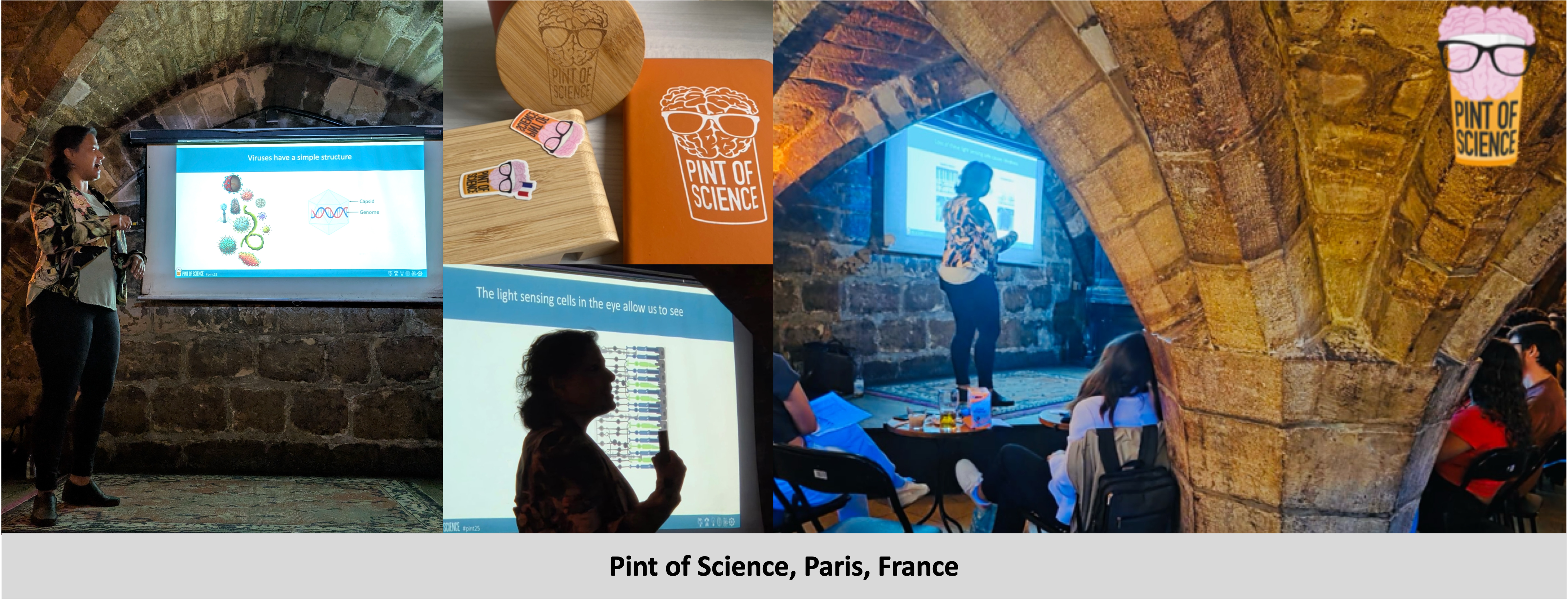
Pint of Science is an annual science festival that brings researchers out of the lab and into local pubs, cafes, and community spaces to share their latest discoveries with the public in a relaxed and informal setting. Founded in the UK in 2013, the event now takes place in dozens of countries worldwide, aiming to make science accessible and engaging for everyone. With talks spanning everything from astrophysics to neuroscience and climate change, Pint of Science encourages direct dialogue between scientists and curious minds over a pint—fostering community, curiosity, and a deeper appreciation for the scientific world. In 2025, I had the opportunity to present my work on ‘Gene therapy’ at a Pint of Science event at a local bar Pomme d’Eve in Paris, organized by DIM BioConvS and Faculté des Sciences - Université Paris Cité. Speaking on the topic “From Disease to Cure: Viruses at Work “, I discussed the fascinating role of viruses in modern medicine. Far from being mere agents of disease, how viruses can be engineered to become powerful tools in gene therapy, offering hope for conditions like blindness.
Popular science communication - Famelab
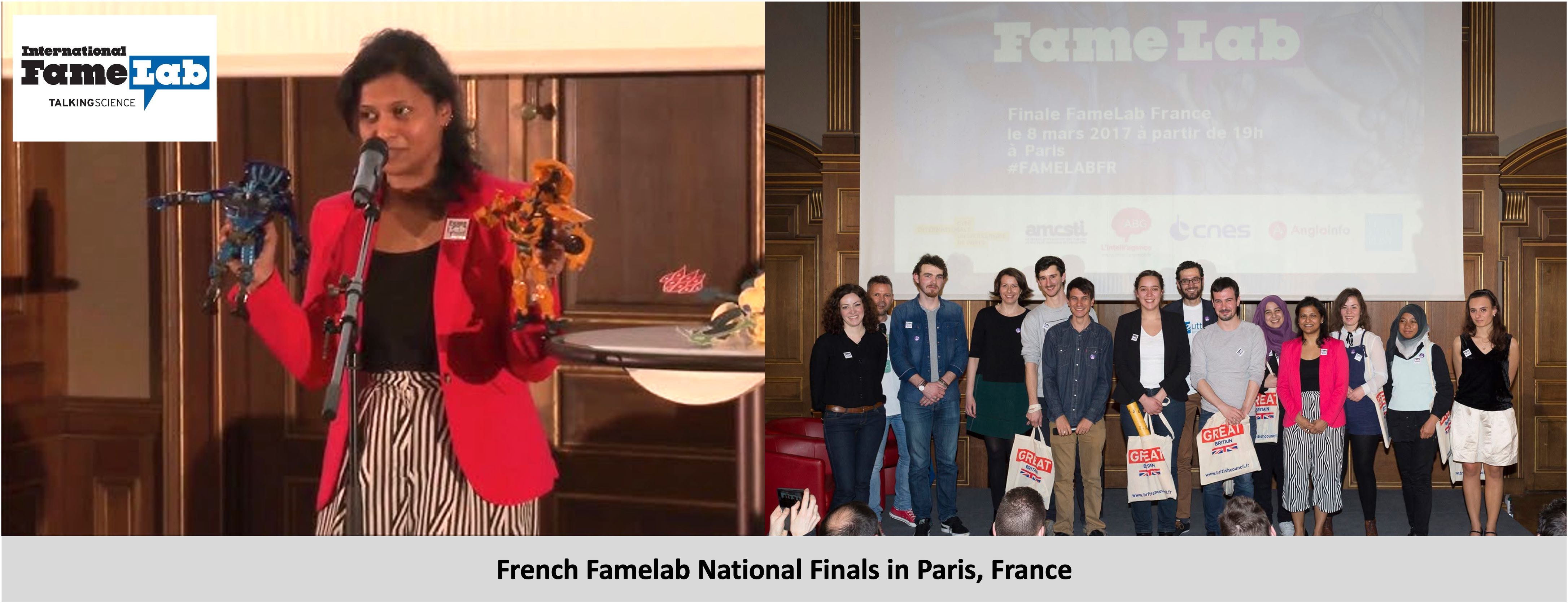
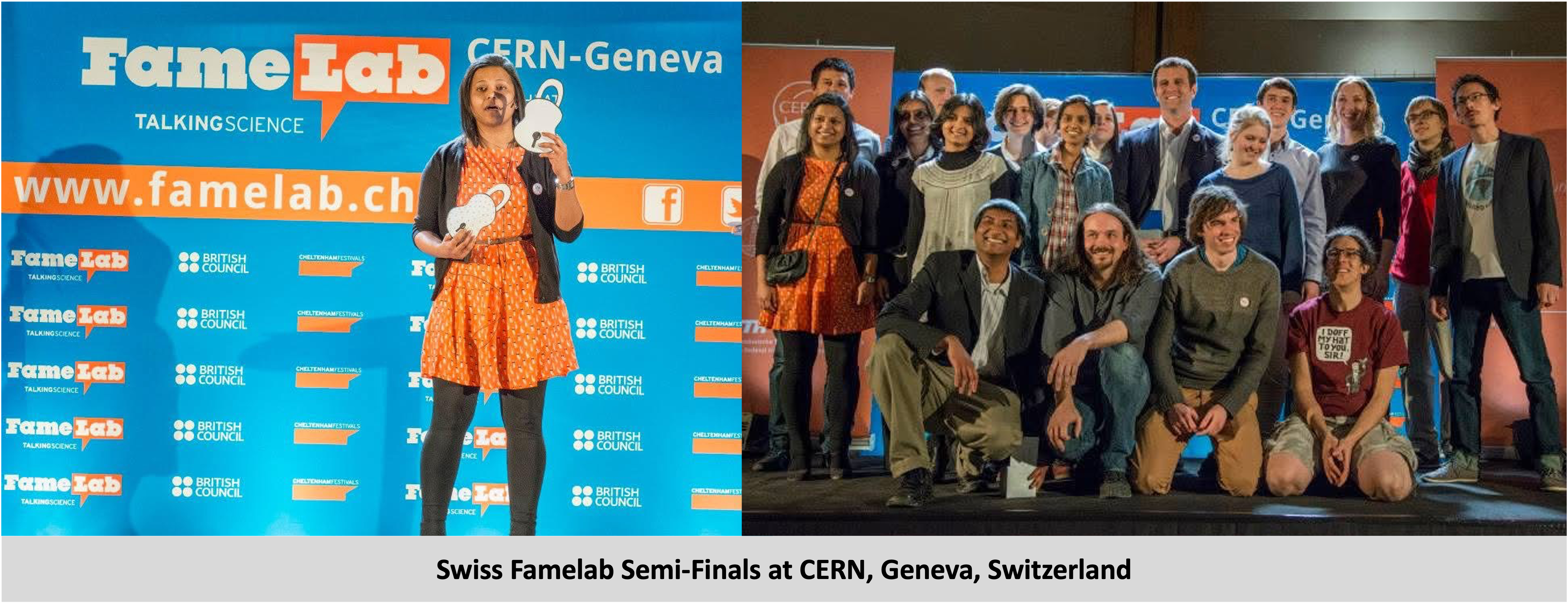
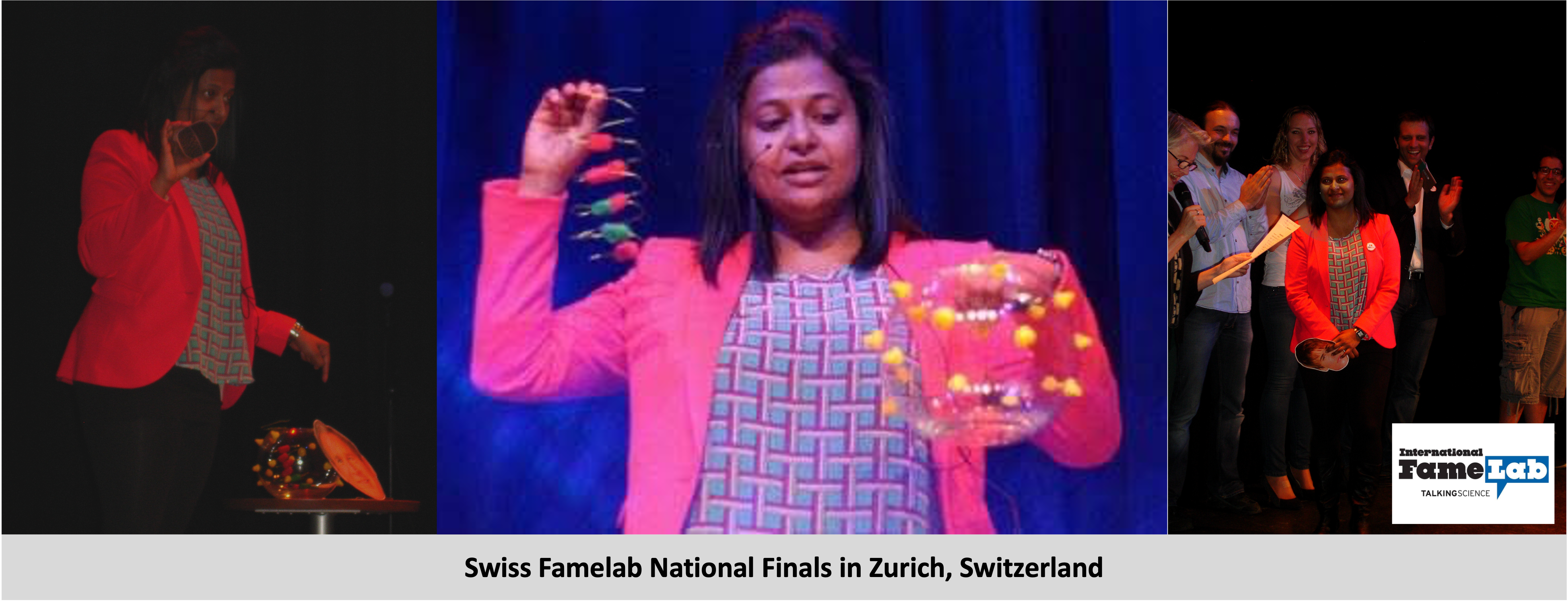
Famelab is an international science communication competition, established by Cheltenham Festivals in 2005, designed to spotlight and train emerging researchers in delivering engaging, clear, and charismatic three minute presentations on topics across science, technology, engineering, mathematics, and social sciences. Competitors must present without slides or notes, judged on the “3 C’s” – Content, Clarity, and Charisma – with winners advancing through national finals to a prestigious international final held annually at the Cheltenham Science. I participated in this competition twice and won awards in both France and Switzerland. 2017: I won the second place in Famelab France national finals.
2013: I won the first place at the Famelab Switzerland regional event held in Geneva. Here I was also awarded a special communication award by TEDx-CERN. At the national Famelab Swiss finals – I won the second place.
Community Outreach for high school students
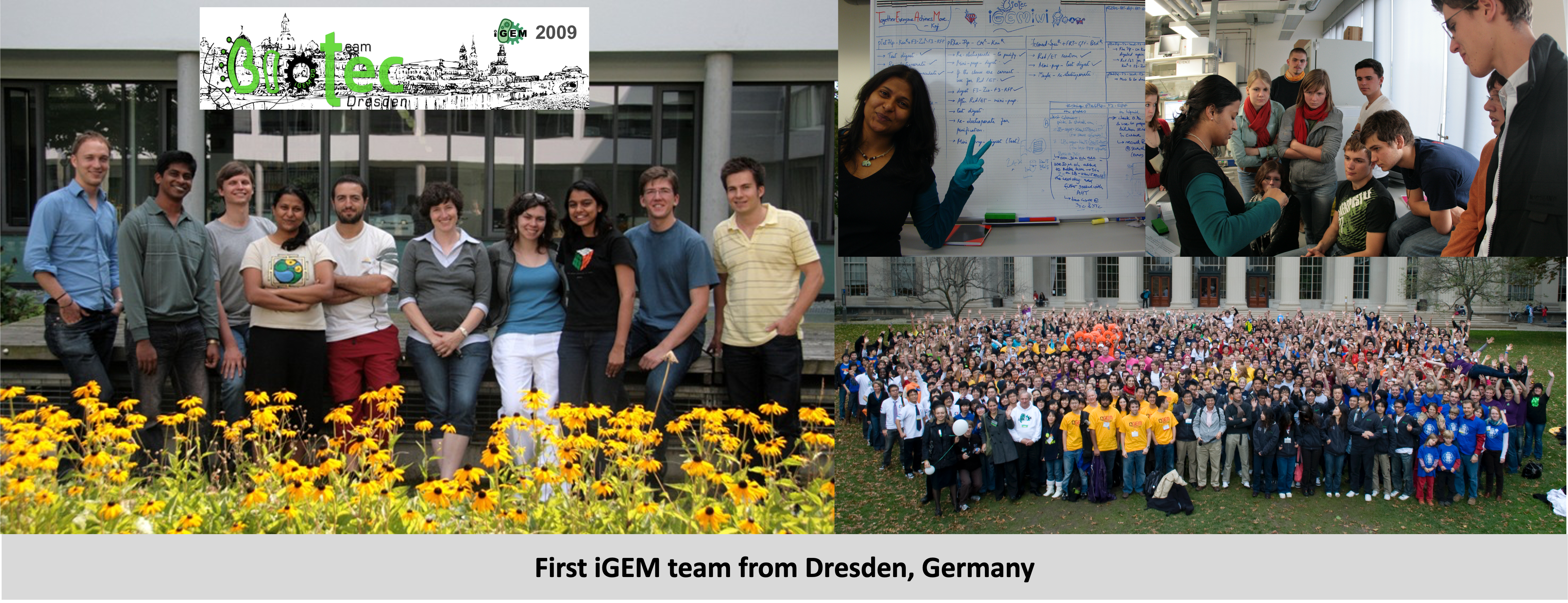
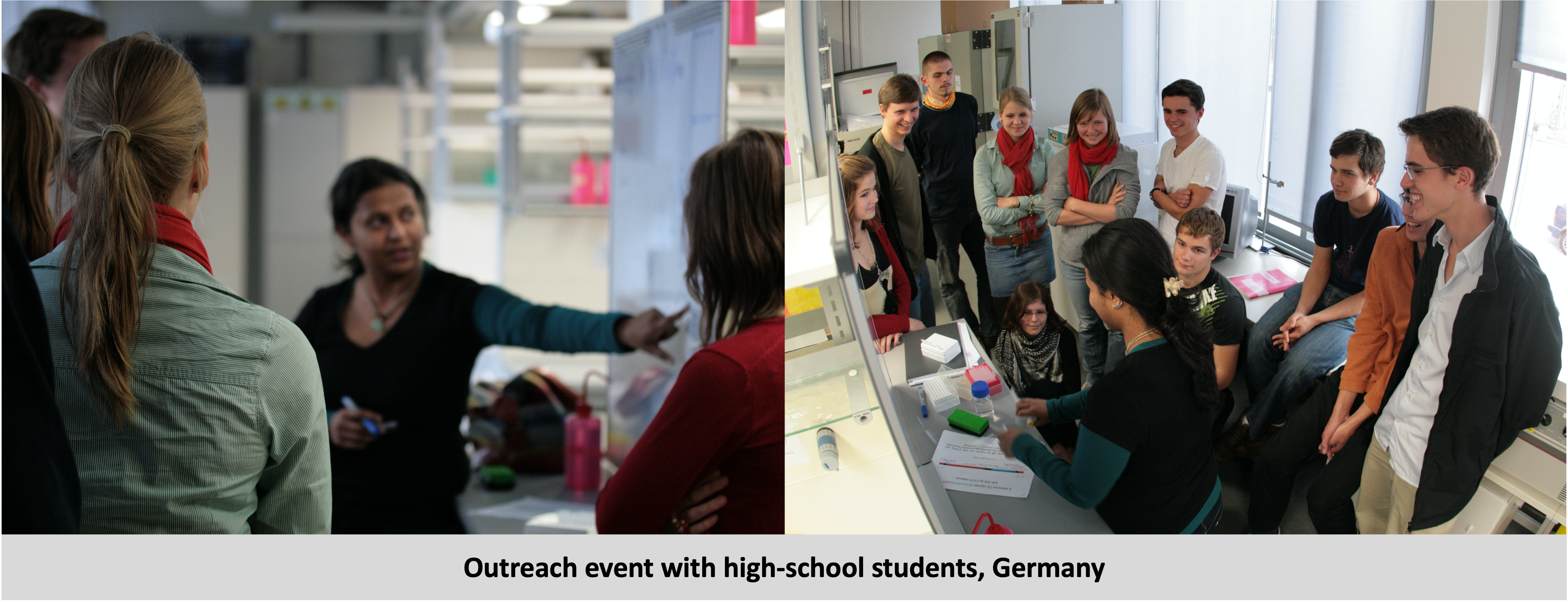
As part of the iGEM team Biotec’s community outreach program, we partnered with the St. Benno-Gymnasium Dresden to welcome a group of students aged 11 to 18 into our iGEM lab. For many, it was their first direct encounter with the world of scientific research. Experiencing science in the dynamic and collaborative setting of iGEM proved both engaging and inspiring, offering a glimpse into real-world applications and the excitement of discovery. The visit also emphasized the value of clear and effective communication—especially in English—as an essential skill for the global citizens of tomorrow. The students asked insightful and thought-provoking questions, demonstrating a keen curiosity and an intuitive grasp of core scientific challenges. Sharing our project with them not only reignited our own sense of purpose but also offered fresh perspectives on our work.
International Synthetic Biology competition - iGEM
iGEM Foundation, Boston, USA/ Paris, France
iGEM (International Genetically Engineered Machine) is a global synthetic biology competition that challenges multidisciplinary teams to design, build, and test innovative biological systems using standardized genetic parts. Launched by MIT in 2003, iGEM has grown into a worldwide movement, promoting open science, creativity, and responsible innovation. Teams work on real-world problems ranging from environmental sustainability to human health, culminating in the annual Giant Jamboree, where projects are showcased and judged. iGEM emphasizes not just technical excellence, but also ethics, safety, and public engagement. I have been involved in iGEM in different capacities over the years.
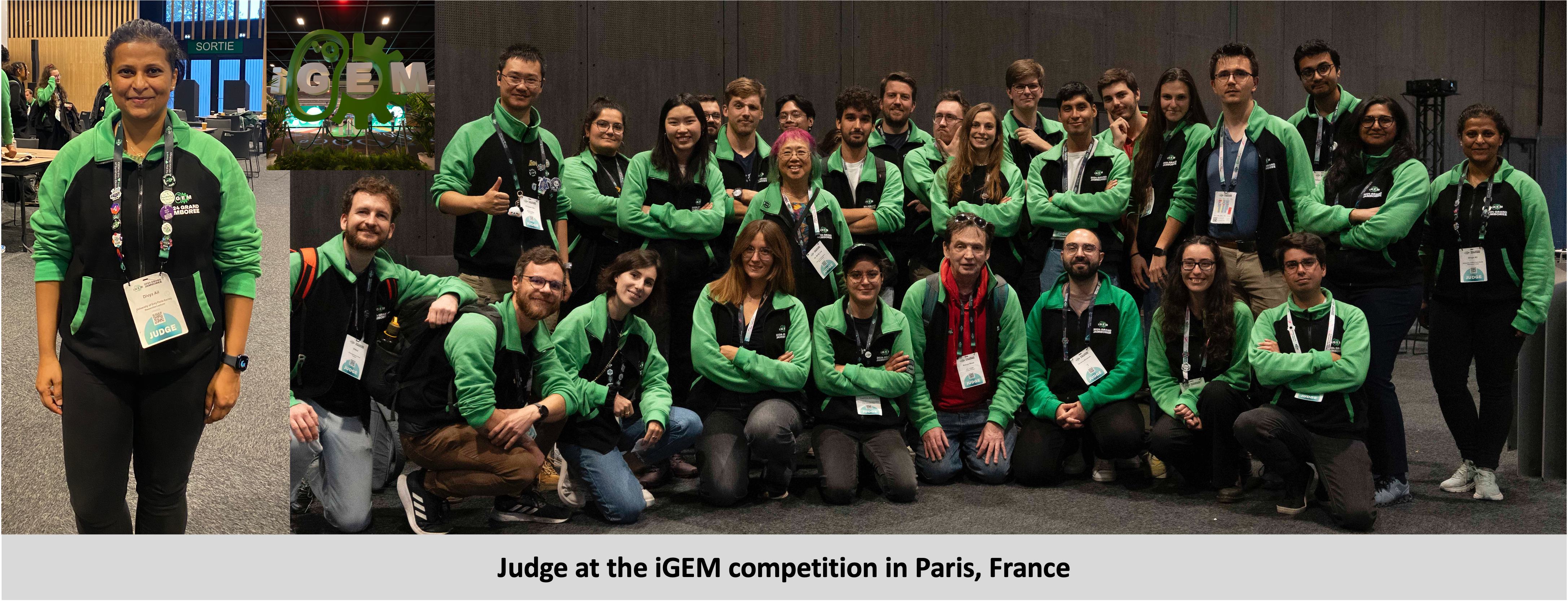
Since 2020: Judge at the iGEM competition. My iGEM journey started as a student in 2009 and came a full circle as a judge in 2020. I have been a judge at the competition every year since then. As a judge at the iGEM competition, I’m consistently amazed by the creativity, rigor, and passion these student teams bring to their projects. Each year, I review projects tackling real-world challenges—from biosensors for environmental toxins to novel therapies for infectious diseases—all built using synthetic biology. It’s incredibly rewarding to see students think critically about the broader implications of their work and engage with diverse disciplines to turn ambitious ideas into actionable solutions.
In 2023 and 2024, I was an advisor to a French and a Chinese iGEM team. As an iGEM team advisor, my role is to guide students through the complex and often unpredictable journey of synthetic biology research. I help them shape their project ideas into feasible designs, navigate technical challenges in the lab, and think critically about ethics, safety, and the real-world impact of their work. One of the most rewarding aspects is watching students grow in confidence and skill—taking ownership of their science while learning to collaborate across disciplines.
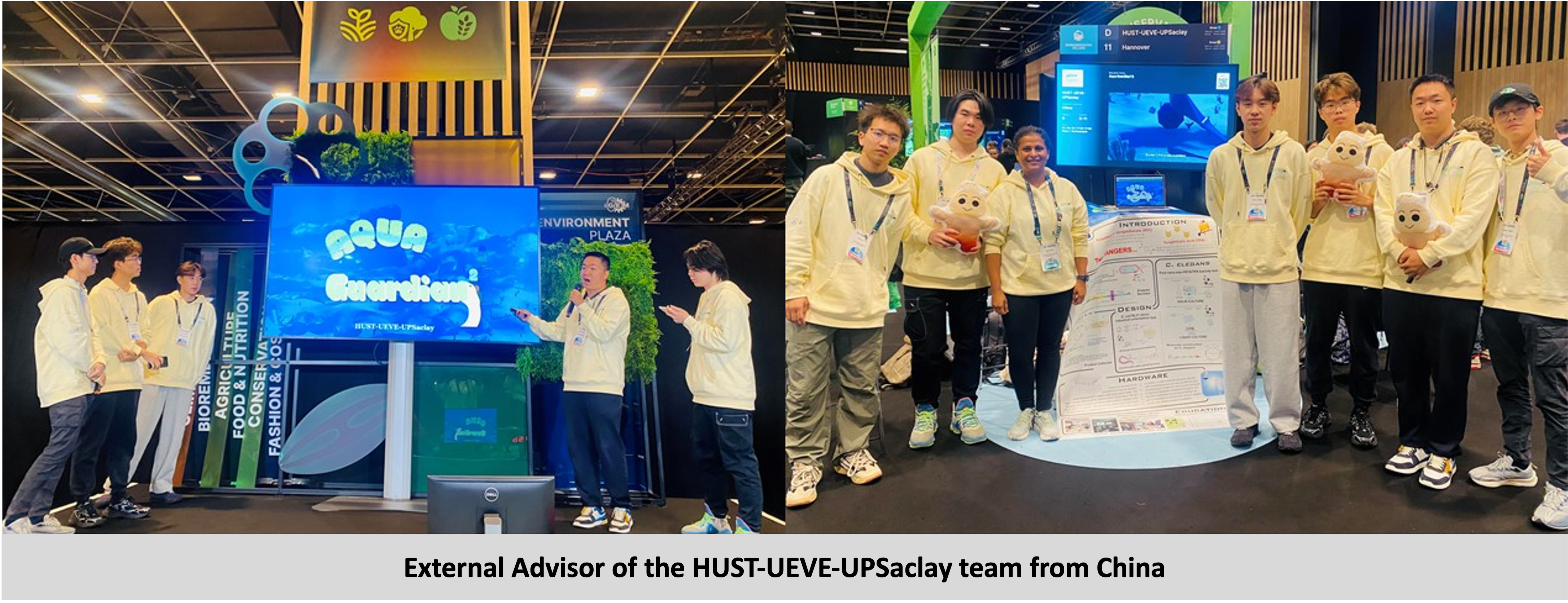
2024: External Advisor of the HUST-UEVE-UPSaclay team from China. I mentored the HUST-UEVE-UPSaclay team on their project ‘Aqua Guardian 2’ which focused on using synthetic biology to develop a dual-system for microplastic degradation (using E.Coli) and collection (using C.elegans). Our team won a gold medal at the iGEM competition held in Paris, France.
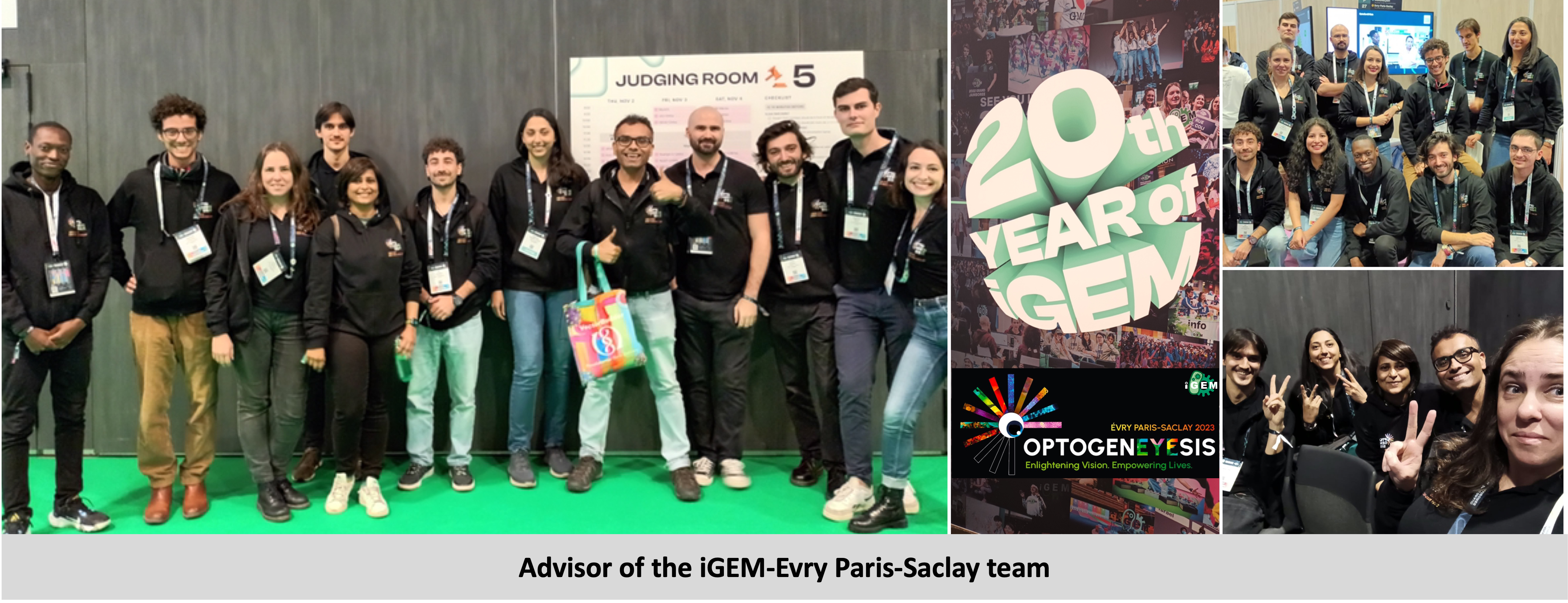
2023:Advisor of the iGEM-Evry Paris-Saclay team from France. I mentored the Evry-Paris-Saclay team on their project ‘Optogenesis’ which focused on using directed evolution to generate new variants of microbial opsins that can be used for vision restoration. Our team won the best hardware award, nomination for the best software and the iGEM gold medal. These achievements received attention and coverage from Centre Supélec, Evry University, Genopole and CEA.
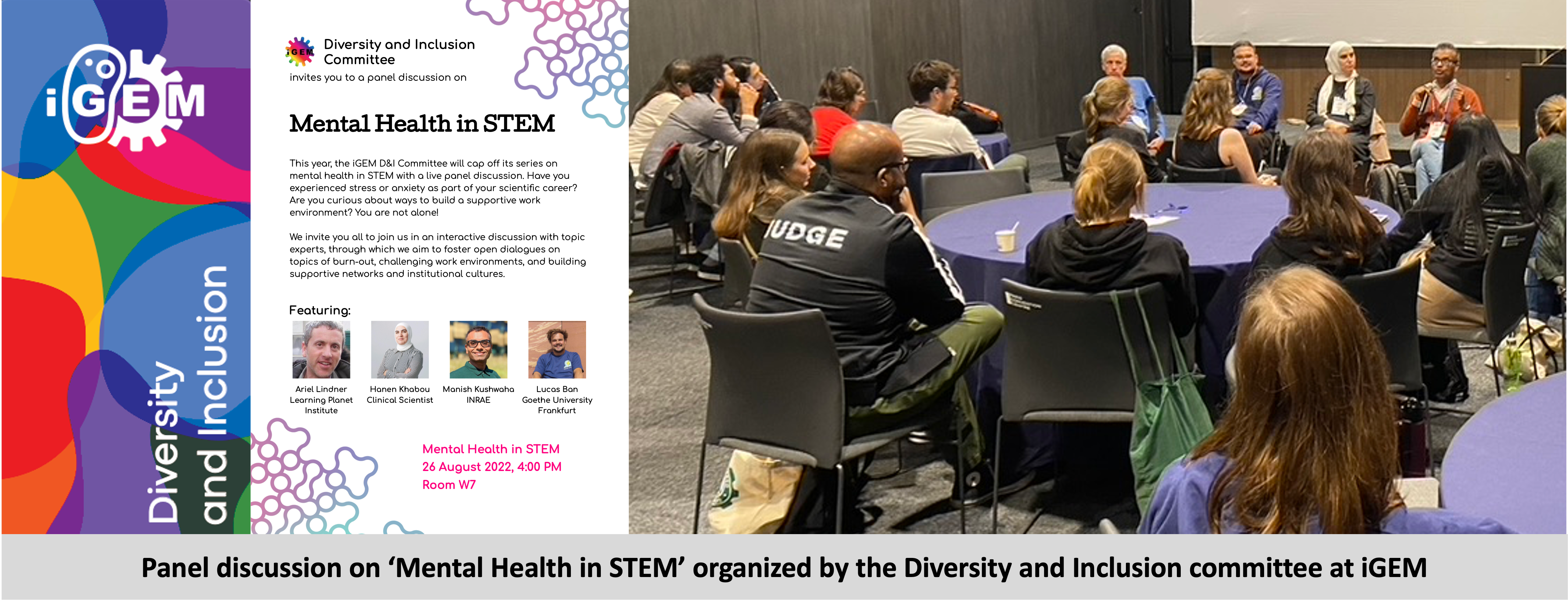
In 2021-2022, I was part of iGEM’s ‘Diversity and Inclusion’ Committee, which has the goal of ensuring that the competition is a welcoming and empowering space for participants of all backgrounds, identities, and experiences. Our mission is to break down barriers—whether cultural, socioeconomic, or structural—that can limit access to science and innovation. We work closely with teams and organizers to promote equitable practices, offer resources on inclusive team dynamics, and celebrate diverse perspectives that enrich synthetic biology. iGEM thrives when every voice is heard, and our goal is to foster a global community where everyone feels seen, supported, and inspired to contribute.
2022: Head of the iGEM-Diversity and Inclusivity committee.
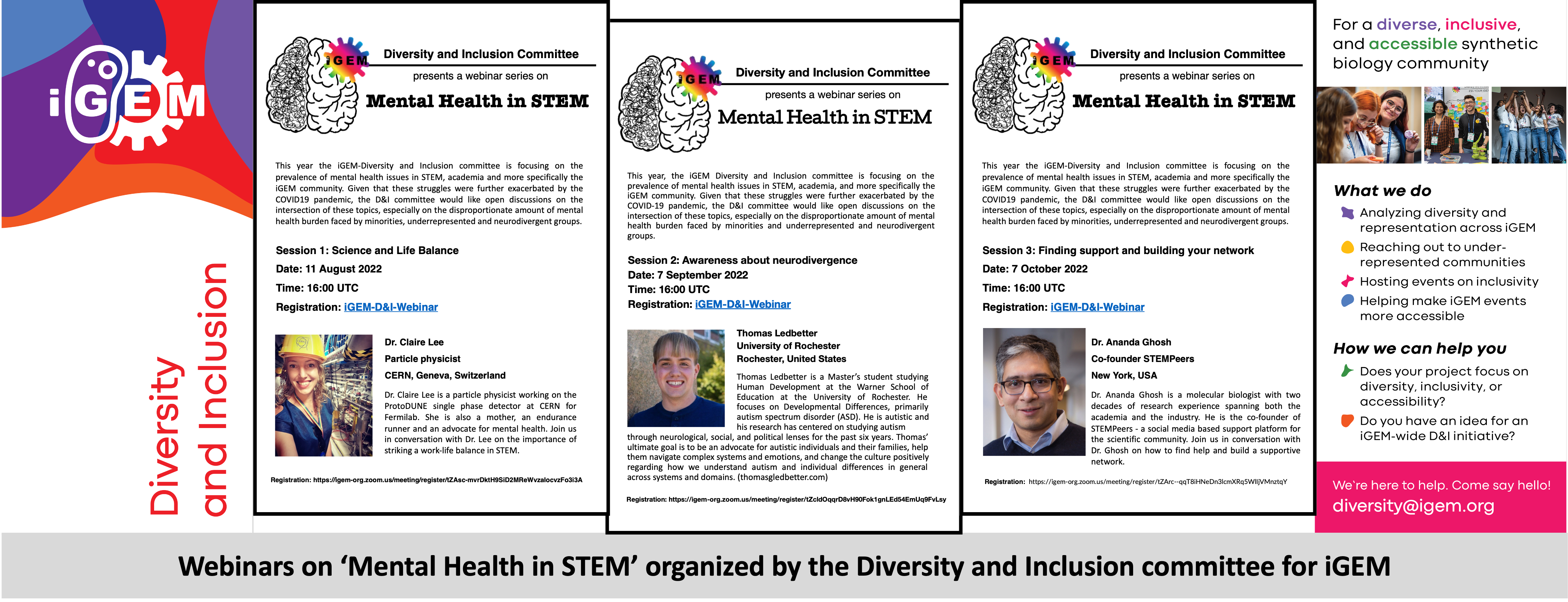
Mental Health Initiative: In 2022 I was elected as the co-chair of the D&I committee. This year we made ‘Mental Health in STEM’ as the focus of our committee, as statistics have shown that one in three students experiences mental health issues and the prevalence is even higher among students belonging to the LGBTQ+ and minority communities. This situation has been further exacerbated during the pandemic and acknowledging the prevalence and persistence of these issues is the need of the hour. We had a dedicated booth at the iGEM competition where we conducted many the interactive events for students and other attendees. I helped organize a series of webinars, panel discussions and workshops on topics such as ‘work-life balance’, ‘how to build a supportive network’, ‘awareness about neurodivergence’ by inviting speakers from different walks of life – we had a female particle physicist from CERN, an autistic researcher from USA and advocates of scientific policy-making.
The students and researchers participated in very large numbers further highlighting the need for open dialogue on ‘mental health’. Exposure to first hand narratives of people facing discrimination due to explicit or implicit biases has also made me reflect on my own journey in the STEM field. And this reflection and self-awareness has strengthened my resolve to actively promote diversity, equity and inclusivity wherever I work.
2021: Member of the iGEM-Diversity and Inclusivity committee.
Inclusivity through accessibility: Through this committee our goal is to improve representation and inclusion of all communities and to address the persistent and systematic exclusion of certain communities from the STEM fields. I have contributed to creating videos and articles that inform the teams about promoting diversity and improving accessibility, and how we can work towards achieving these goals together.
2009: Member of the as iGEM team from TUD, Germany. I was the part of the first iGEM team from TU Dresden (Biotec) that presented our project at MIT, USA. Our team won a silver prize. Our project titled ‘Temporal and spatial control of protein synthesis by in vitro recombination inside picoliter reactors’ focused on developing a cell-free system. Manufacturing functionalized proteins in vitro poses a challenge, as it requires coordinated molecular assemblies and multi-step reactions. In this project we aimed to control, over time and space, the production of proteins tagged with a silver-binding peptide for in situ silver nanoparticle nucleation inside microdroplets generated by microfluidic devices.