Values I care about…
Diversity and Inclusion
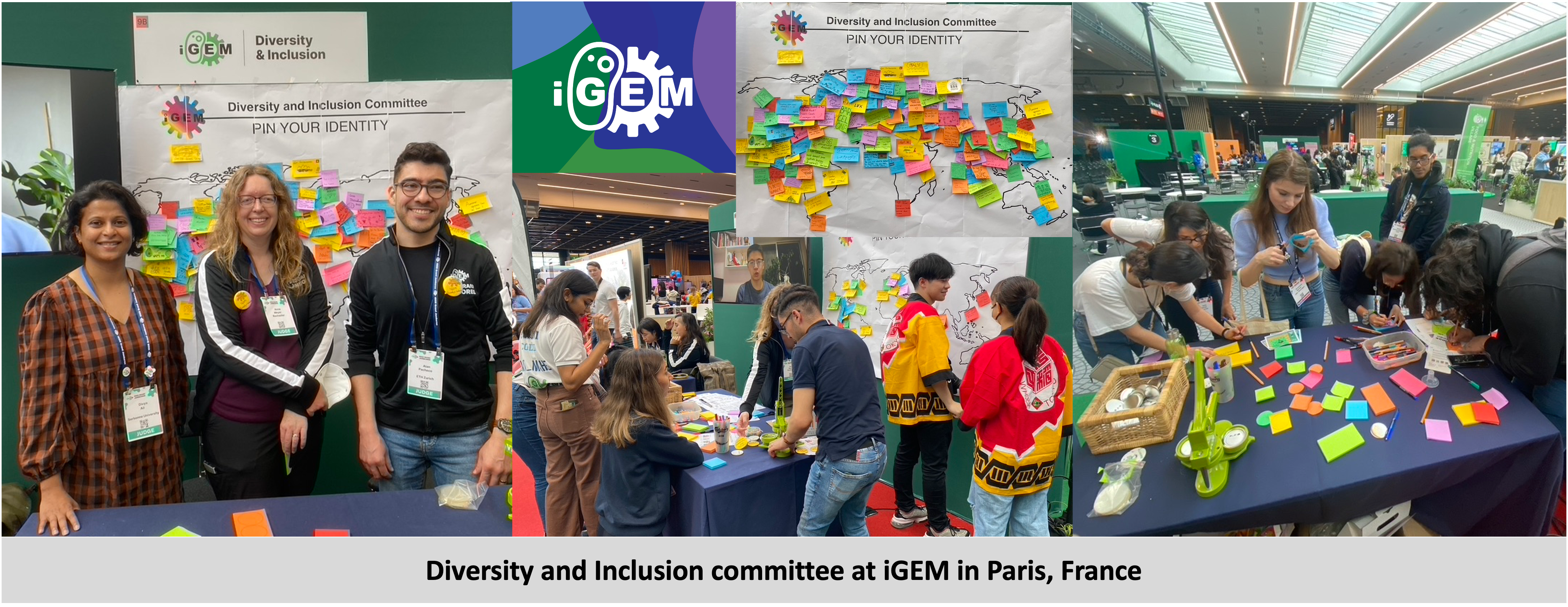
There is a gender-gap that exists in the STEM (Science, Technology, Engineering and Medicine) fields due to implicit or explicit bias that have caused persistent and systematic exclusion of women from STEM. Hence promoting ‘Diversity and Inclusion’ in science has been an important aspect for me. As a member of the iGEM-Diversity and Inclusion committee, I have participated in and organized several activities aimed at raising awareness and improving diversity at workplaces.
Inclusivity through accessibility: Through this committee our goal is to improve representation and inclusion of all communities and to address the persistent and systematic exclusion of certain communities from the STEM fields. I have contributed to creating videos and articles that inform the teams about promoting diversity and improving accessibility, and how we can work towards achieving these goals together.
Mental Health Initiative: In 2022 I was elected as the co-chair of the D&I committee. This year we made ‘Mental Health in STEM’ as the focus of our committee, as statistics have shown that one in three students experiences mental health issues and the prevalence is even higher among students belonging to the LGBTQ+ and minority communities. This situation has been further exacerbated during the pandemic and acknowledging the prevalence and persistence of these issues is the need of the hour. We had a dedicated booth at the iGEM competition where we conducted many the interactive events for students and other attendees.
I helped organize a series of webinars, panel discussions and workshops on topics such as ‘work-life balance’, ‘how to build a supportive network’, ‘awareness about neurodivergence’ by inviting speakers from different walks of life – we had a female particle physicist from CERN, an autistic researcher from USA and advocates of scientific policy-making. The students and researchers participated in very large numbers further highlighting the need for open dialogue on ‘mental health’. Exposure to first hand narratives of people facing discrimination due to explicit or implicit biases has also made me reflect on my own journey in the STEM field. And this reflection and self-awareness has strengthened my resolve to actively promote diversity, equity and inclusivity wherever I work.
Education
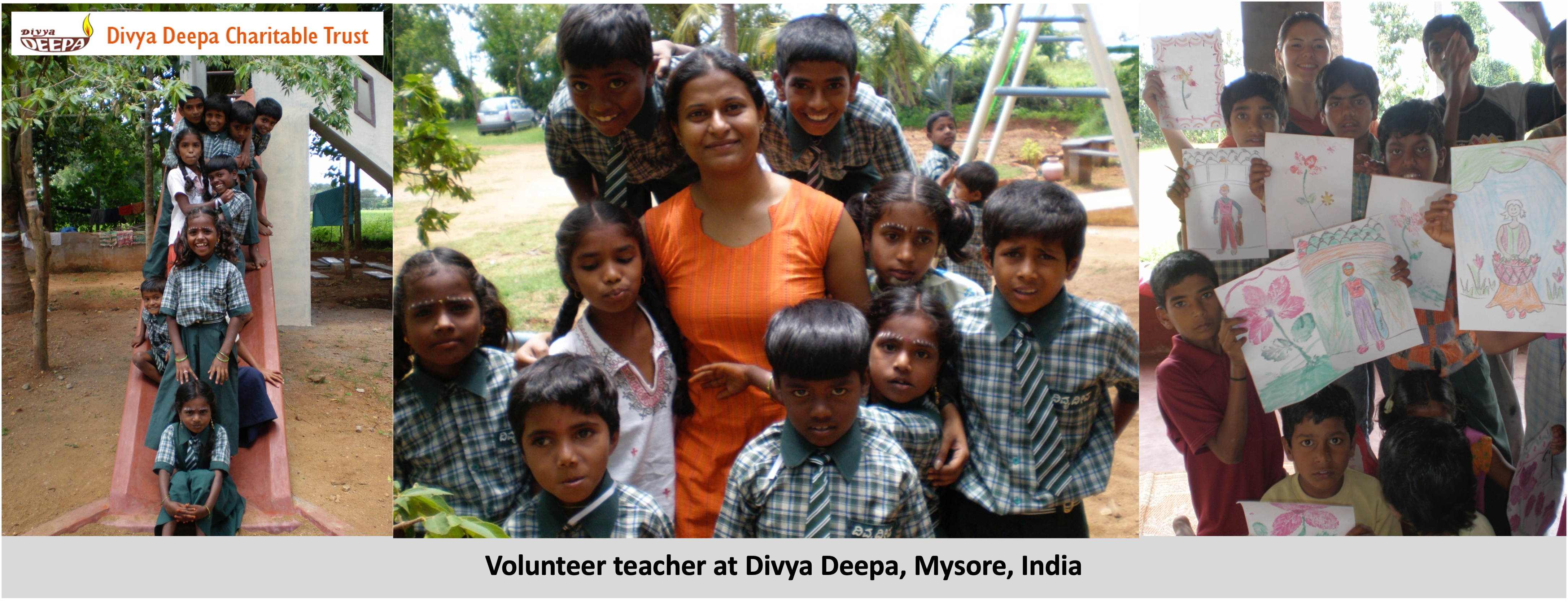
Volunteer teacher at orphanage in Kaliyuva Mane, Mysore, India: I worked as a volunteer teacher at Kaliyuva Mane - an alternative school run by the Divyadeepa Charitable trust in Mysore, India. The school caters to children who are mostly drop-outs from regular schools, abused children, some who worked as child laborers in nearby farms, orphans and who generally belonged to the marginalized sections of society. I was mainly involved in teaching basic school-level math and science, as well as helping with the development of visual and interactive teaching aids. I was also involved in aiding with the sustainable development of the school premises.
Empowerment
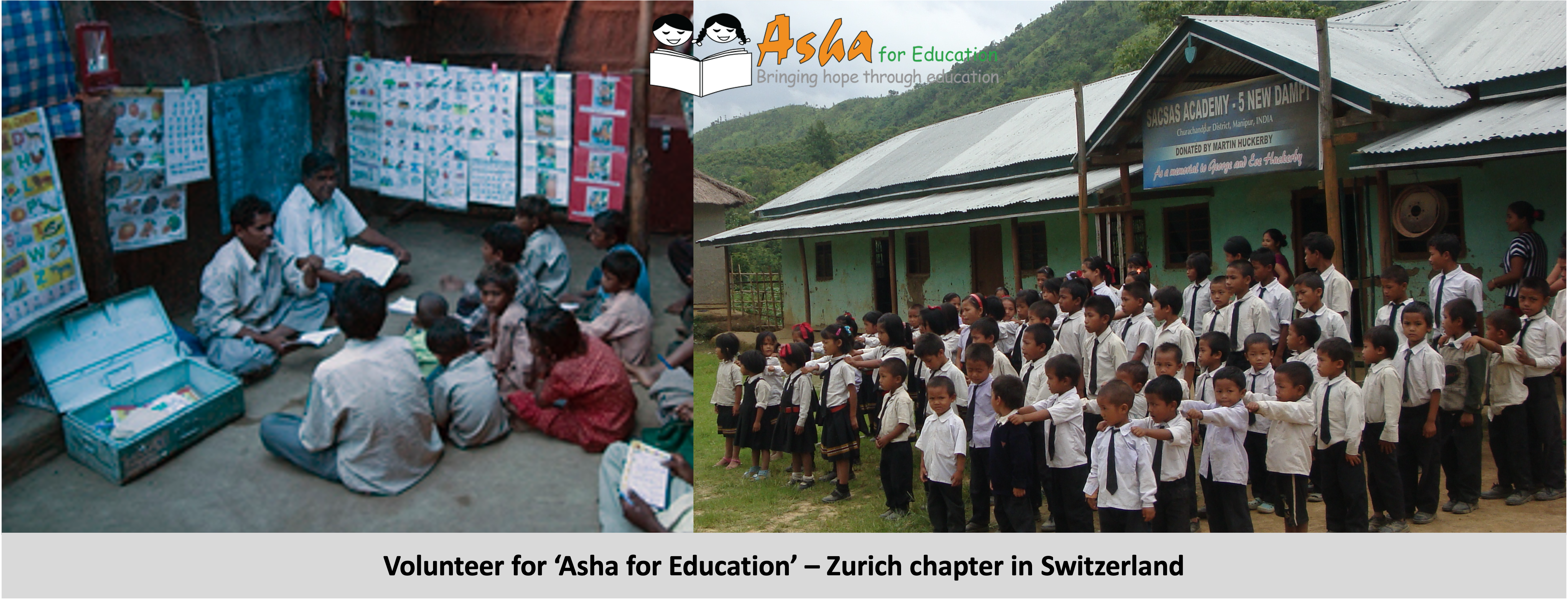
General Secretary of Asha Foundation in Zurich, Switzerland: While I was working towards my PhD thesis in Zurich, from 2010-2014 I got involved with a charity organization called Asha for Education – Zurich chapter. ‘Asha for Education’ is a volunteer-based organization headquartered in California, USA with its branches operating all over the world. The goal of the organization is to conduct fundraising activities through awareness seminars, collaborations and events. The funds raised are used to support NGOs in India working on education projects mostly at grassroot levels, in isolated and far-flung regions, tribal regions and regions embroiled in political conflict. I have served at this organization in different capacities – as a volunteer working on co-ordination of projects, management and execution of fundraising events, as the editor of the newsletter and the annual report and for a long time as the general secretary of the association.
Read the Annual Report 2011 and Annual Report 2010
Advocacy
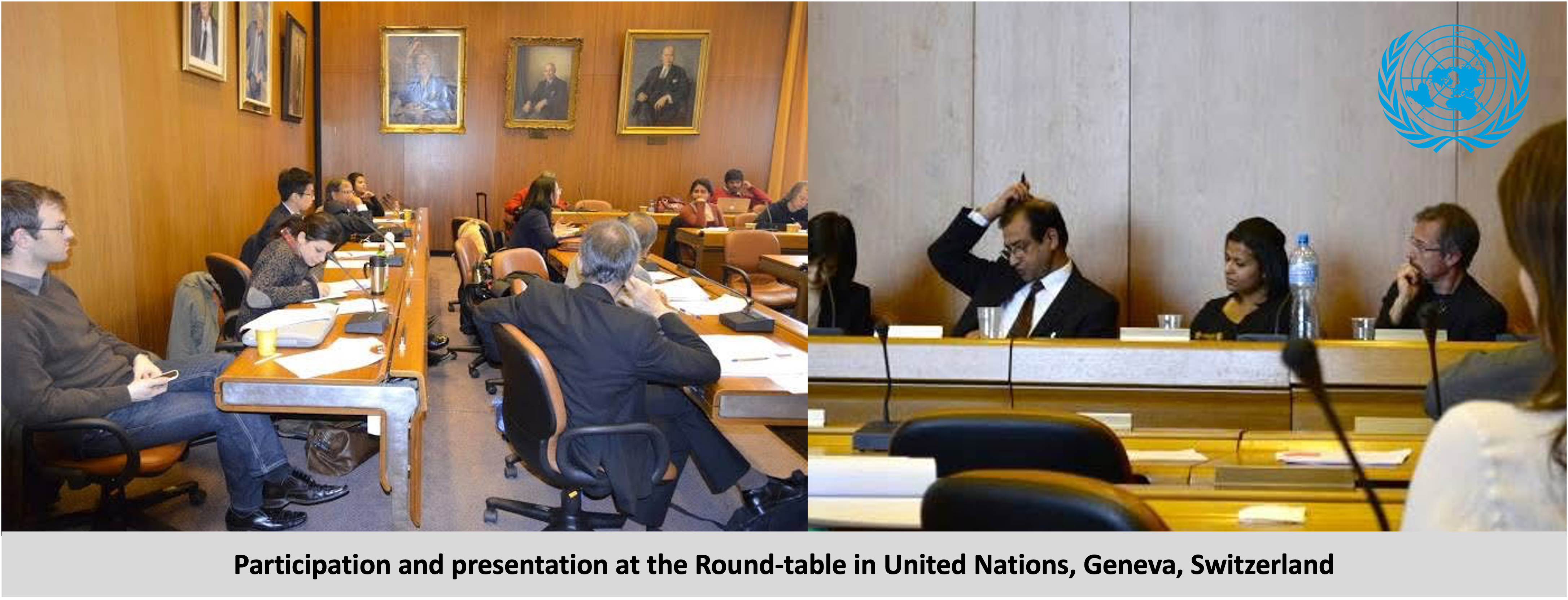
United Nations, Geneva, Switzerland: In 2013, while I was serving as the general secretary of ‘Asha for education – Zurich chapter’, I was invited to participate at a round-table discussion at the International Labor Office of United Nations in Geneva, Switzerland. I was part of the panel discussion on involvement of scientific diaspora in home country development. I had this rare opportunity of interacting with social scientists and government officials which provided me a glimpse into governing and policy-making.
Take a look at my presentation and the report from the UN round-table in Geneva.